
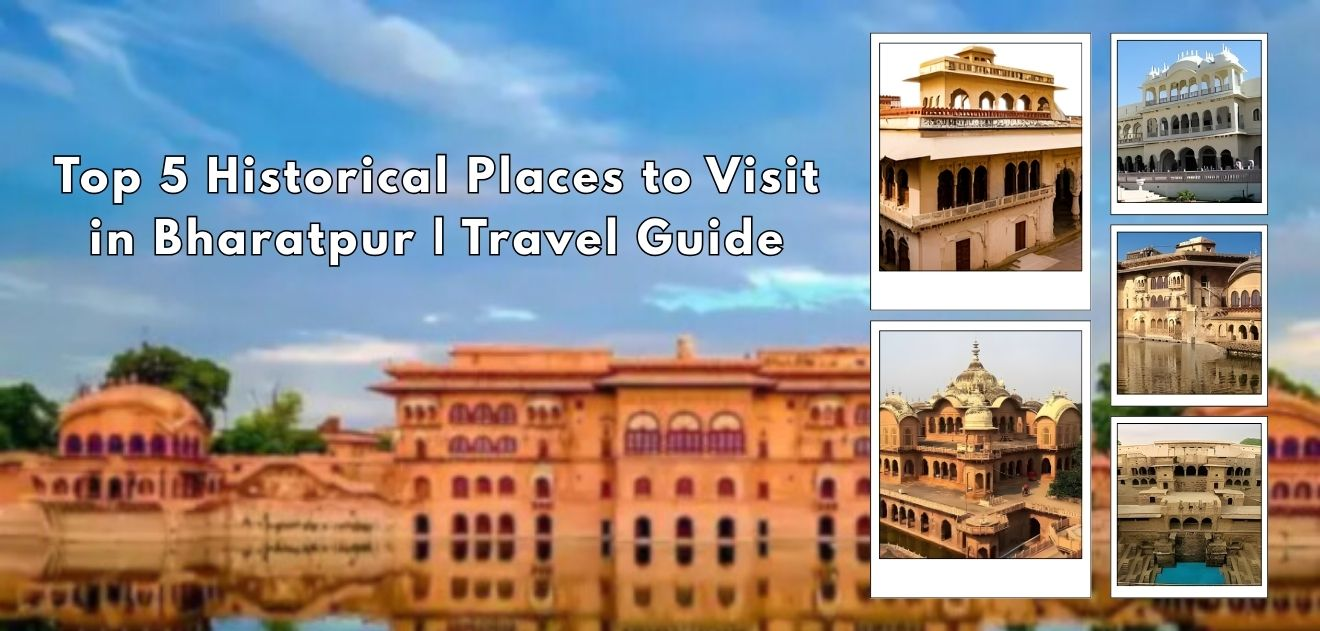
Top 5 Historical Places to Visit in Bharatpur: Must-See Heritage Sites
Bharatpur, a city located in eastern Rajasthan, may come to mind for many as simply being a bird sanctuary. While this is certainly a notable feature of the city, it does not accurately convey the greater depth of Bharatpur’s historical significance. Bharatpur was once an influential princely state ruled by the Jats, and as such, many of the architectural remains (e.g., forts, palaces, and temples) still exist today.
This blog identifies the five most historically significant sites in Bharatpur if you wish to explore the city beyond just “birds.” This guide will also help you arrange your itinerary accordingly, especially if you plan to visit from Delhi, Agra, or Jaipur.
Why Bharatpur Holds Historical Importance
Bharatpur’s rise in the 18th century disrupted the political balance of North India. Under rulers like Maharaja Suraj Mal, the city transformed from a regional settlement into a military stronghold. Its rulers emphasized defense, water control, and administrative efficiency rather than ornamental architecture.
Many top places to visit in Bharatpur exist because of this mindset. Forts were designed to resist siege warfare, palaces doubled as administrative centers, and religious structures reflected public responsibility rather than royal display. Understanding this context makes every site more meaningful.
1. Lohagarh Fort – The Core of Bharatpur’s Power
Lohagarh Fort is the most important historical structure in the city. Built in the mid-1700s, the fort became famous for surviving multiple British attacks at a time when most North Indian forts had already fallen. Its strength came from design, not decoration.
This fort is one of the most significant Bharatpur historical sites because it reflects how warfare actually worked during the period. Thick earthen walls absorbed cannon fire, wide moats slowed infantry movement, and limited entry points reduced vulnerability. Inside the fort complex are palaces, administrative buildings, and armories, all placed with function in mind. A visit here requires patience. The fort does not impress instantly, but it reveals its value through layout and scale. Allocate sufficient time to walk the ramparts and internal courtyards.
2. Deeg Palace – Seasonal Governance and Control
Deeg Palace lies outside the main city but played a critical role in Bharatpur’s royal system. It functioned as a summer capital, allowing rulers to escape the heat while continuing administrative work. The palace was also a demonstration of resource control, particularly water.
Among the best tourist attractions in Bharatpur, Deeg Palace stands apart because of its planned gardens, water channels, and pavilion structures. Influenced by Mughal aesthetics, the palace still retains a distinctly regional identity. The buildings were designed to manage airflow and temperature naturally.
Deeg is best visited as a half-day trip. While visually calmer than other Rajasthani palaces, it provides insight into how rulers balanced comfort with political authority.
3. Bharatpur Palace and Museum – The Administrative Heart
Bharatpur Palace does not dominate the skyline, but it holds the city’s institutional memory. Located centrally, the palace served as the seat of governance and now houses a museum that documents the political evolution of the region.
This complex is one of the most accessible Bharatpur historical sites for travelers interested in structured learning. The museum displays weapons, royal portraits, manuscripts, and official records that trace the kingdom’s alliances and conflicts. The architecture reflects shifting influences, from Mughal to colonial.
A guided visit adds value, especially if you want to understand how Bharatpur functioned beyond its military reputation.
4. Ganga Mandir – Public Responsibility and Faith
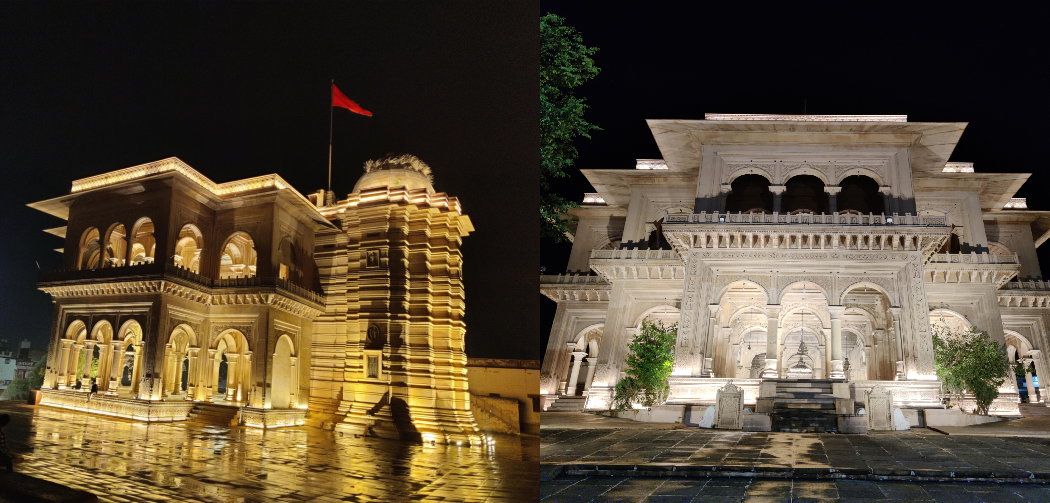
Ganga Mandir was commissioned in the early 20th century following a period of famine and hardship. Rather than celebrating conquest, the temple symbolized recovery and the ruler’s obligation toward public welfare. Built from white marble, it remains one of the city’s most visible landmarks.
When listing top places to visit in Bharatpur, this temple is included not for scale but for meaning. It represents a transition in royal priorities—from warfare to social responsibility. The structure also marks a period when princely states were redefining their role under British influence.
The temple remains active, so visitors should observe local customs and avoid peak prayer hours.
5. Band Baretha – Strategic Isolation and Water Management
Band Baretha is rarely crowded, largely because it requires deliberate effort to reach. Built as a dam and royal retreat, the site demonstrates how Bharatpur’s rulers approached environmental planning. Water storage here supported agriculture and sustained the surrounding region.
Among the best tourist attractions in Bharatpur, Band Baretha appeals to travelers who prefer context over convenience. The surrounding forested area was once used for hunting, while the dam itself highlights long-term thinking in resource management.
Private transport is necessary, but the site offers quiet reflection and historical relevance without commercial interference.
Planning Your Travel to Bharatpur
Bharatpur is well connected by rail and road. It sits close to Agra and lies on major train routes linking Delhi and Mumbai. This makes it a logical stop for travelers exploring North India’s historical circuit.
If your itinerary includes multiple Bharatpur historical sites, dependable transport becomes essential. Many travelers choose services like Luxury Urbania Rental to manage day trips to Deeg and Band Baretha efficiently, especially when traveling in groups or with limited time.
Reaching Bharatpur by Road
Bharatpur is well-connected to major highways such as the Delhi-Agra-Jaipur Golden Triangle Route; therefore, travelling by road is probably your best option for reaching Bharatpur from either Delhi, Agra, or Jaipur. Bharatpur is approximately 180 km from Delhi, 55 km from Agra, and 185 km from Jaipur. National Highway NH-21 connects Bharatpur to both Agra and Jaipur via the routes of NH-44/NH-11 (depending on the stretch you are on) and is a beautiful, scenic route that provides a smooth and relaxing ride. There is regularly scheduled traffic on these highways, and their condition is very good, which will provide you with comfort while you are driving in your own vehicle or using a bus service.
From Delhi
- Distance: Approx. 220 km
- Travel time: 4.5–5 hours
- Route: Delhi → Faridabad → Palwal → Hodal → Kosi → Bharatpur
From Jaipur
- Distance: Approx. 185 km
- Travel time: 3.5–4 hours
- Route: Jaipur → Dausa → Mahwa → Bharatpur
Best Time to Explore the City
October to March is the most practical period for visiting Bharatpur. Summers are extreme, and long walks through forts and palace grounds become uncomfortable. Winter months offer better visibility, manageable crowds, and more flexible schedules.
Early mornings are ideal for exploring the top places to visit in Bharatpur, particularly Lohagarh Fort and Bharatpur Palace, before foot traffic increases.
Basic Travel Tips
- Keep water bottles with you
- Wear light and comfortable clothes
- Respect temple guidelines
- Hire a guide at Lohagarh Fort or Deeg Palace if you want deeper information
- Book hotels early if visiting during winter or holidays
Conclusion
Bharatpur does not cater to casual tourism. Its value lies in realism, resistance, and governance. The city tells a story of regional power that operated outside imperial centers and survived through strategy rather than spectacle.
For travelers interested in meaningful history, Bharatpur offers clarity without exaggeration. It is best approached with preparation, realistic expectations, and an interest in how power was built and defended in pre-colonial India. This guide focuses on relevance rather than promotion, helping you experience Bharatpur as it was—and understand why it still matters today.